
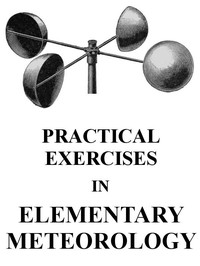
Practical Exercises in Elementary Meteorology by Robert DeCourcy Ward
Let's be clear from the start: this is not a novel. Published in 1899, Robert DeCourcy Ward's book is exactly what the title promises—a manual of hands-on experiments and projects designed to teach the fundamentals of weather science. Forget dry lectures; Ward was a professor who believed you learned by doing.
The Story
The 'plot' is your own journey of discovery. The book is structured as a series of exercises. It starts by guiding you on how to build simple, effective weather instruments from everyday materials—thermometers, barometers, rain gauges. Then, it walks you through the process of taking daily observations, recording data in detailed logs, and creating your own weather maps. You learn to identify cloud types, track wind patterns, and understand the relationships between pressure, temperature, and storms. The narrative is the story of your growing ability to read the sky's language through systematic, personal investigation.
Why You Should Read It
Reading this today is a fascinating historical experience. You get a direct window into the birth of modern meteorology as a practical science. Ward's passion for education is contagious. His instructions are remarkably clear, and there's a charming, earnest quality to his belief that anyone with curiosity can contribute to scientific understanding. It makes you appreciate how far we've come (hello, satellite imagery!) while also making you want to go outside with a notebook. The core philosophy—that deep knowledge comes from active engagement—feels incredibly modern.
Final Verdict
This book is a hidden gem for a specific reader. It's perfect for history of science enthusiasts, homeschooling parents looking for rich project ideas, or any weather hobbyist with a DIY spirit. If you love the idea of historical re-creation or citizen science, you'll find Ward to be a brilliant and encouraging guide from the past. It's not a casual bedtime read, but as a practical manual and a historical artifact, it's utterly captivating. You'll never look at a cloud or a falling barometer the same way again.
Charles Hill
11 months agoHonestly, the clarity of the writing makes this accessible. Exceeded all my expectations.
Brian Miller
10 months agoHelped me clear up some confusion on the topic.


Lucas Flores
2 months agoI was skeptical at first, but it provides a comprehensive overview perfect for everyone. Absolutely essential reading.