
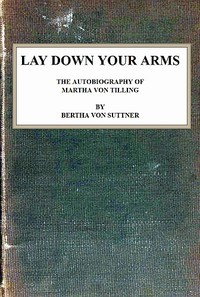
Lay Down Your Arms: The Autobiography of Martha von Tilling by Bertha von Suttner
Bertha von Suttner's novel, written as an autobiography, gives us Martha von Tilling. We meet her as a young woman in mid-1800s Austria, fully immersed in the aristocratic world. Her first marriage is to a soldier, and when he dies in battle, she's expected to see it as a heroic sacrifice. She remarries, this time to another officer named Friedrich. Through his eyes and her own growing awareness, Martha begins to see the brutal reality behind the patriotic speeches and military parades.
The Story
The plot follows Martha's life, but the real journey is in her mind. After Friedrich also becomes a victim of war, her disillusionment is complete. She starts reading, thinking, and speaking out against the idea that war is a natural and necessary force. She faces isolation and ridicule from her own class. The story isn't about winning a big political victory; it's about one woman's moral and intellectual awakening, and the immense personal cost of refusing to go along with the crowd. It's a quiet, powerful story of conversion—from believer to skeptic to activist.
Why You Should Read It
You should read this because Martha feels so real. Her doubts start small. Her arguments with her husband, Friedrich, aren't epic showdowns; they're the tense, loving debates of two people trying to understand a broken world. Suttner makes the case for peace not through dry philosophy, but through the intimate devastation of a single family. You feel Martha's loneliness as her old friends pull away. You feel her courage when she decides her conscience is more important than her social standing. It turns a massive political issue into a heartbreaking personal one.
Final Verdict
This book is perfect for readers who love character-driven historical fiction, like Kristin Hannah's The Nightingale or Anthony Doerr's All the Light We Cannot See, but who want to explore the roots of the peace movement. It's also for anyone who's ever questioned the 'way things have always been.' Be prepared: it's not a light read. It's thoughtful, sometimes slow, and deeply emotional. But over a century later, Martha's question—'Why must we keep doing this?'—still echoes, making this forgotten classic feel urgently new.
Sandra Hill
2 months agoJust what I was looking for.
Michelle Rodriguez
1 year agoThe layout is very easy on the eyes.
Carol Martin
9 months agoI stumbled upon this title and the plot twists are genuinely surprising. A true masterpiece.
Carol Lewis
10 months agoSimply put, it provides a comprehensive overview perfect for everyone. Highly recommended.


Edward Davis
2 months agoI was skeptical at first, but it creates a vivid world that you simply do not want to leave. Absolutely essential reading.