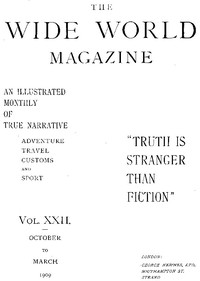
The Wide World Magazine, Vol. 22, No. 127, October to March, 1909 by Various
Let's be clear from the start: this isn't a book with a beginning, middle, and end. 'The Wide World Magazine' is exactly what it says on the cover—a bound collection of six monthly issues from October 1908 to March 1909. Published in London, it was a wildly popular periodical that promised 'true stories from every corner of the globe.' This volume is a buffet of non-fiction narratives from the height of the British Empire, written by the people who lived them.
The Story
There is no single plot. Instead, you open the pages and are immediately transported. One article might detail a harrowing escape from bandits in Persia, told by a British officer. The next could be a naturalist's account of tracking gorillas in the Congo. You'll find photographs (remarkably clear for the time) of ancient ruins, strange customs, and unfamiliar landscapes. There are tales of shipwrecks, hunting expeditions, and first contact with remote tribes. The 'story' is the collective pulse of adventure and curiosity that drove the era. It's the sound of the world getting smaller, one firsthand report at a time.
Why You Should Read It
I loved this book for its raw, unfiltered perspective. There's no modern political correctness, which can be jarring but is historically revealing. The writers aren't crafting literary masterpieces; they're trying to convey the sheer astonishment of what they saw and did. You get their pride, their fear, their biases, and their wonder all mixed together. Reading it feels less like studying history and more like eavesdropping on a group of globe-trotters in a smoky club. The prose is direct and energetic, meant to thrill the reader back home. It’s a powerful reminder of how vast and mysterious our planet felt before the internet.
Final Verdict
This is a perfect read for history nerds, travel enthusiasts, and anyone who loves primary sources. If you enjoy shows like 'The Crown' or books about the Age of Exploration, you'll find this utterly gripping. It's also great for short attention spans—you can dip in and out of stories over weeks. A word of caution: the colonial attitudes are front and center, so be prepared to read with a critical mind. But if you can view it as a historical document, not a modern guide, it's an incredibly engaging and human portal straight to 1909. Just be ready for some serious wanderlust.