
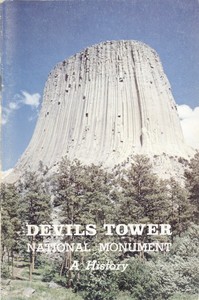
Devils Tower National Monument: A History by Ray H. Mattison
Most of us know Devils Tower from that famous shot in Close Encounters of the Third Kind—a silent, mysterious giant. Ray H. Mattison's history gives that giant a voice and a past. He was a historian for the National Park Service, and you can tell he had a deep respect for both the facts and the spirit of the place.
The Story
Mattison doesn't just start with the Tower's volcanic birth millions of years ago. He builds the story through the people who found meaning in it. He shares the sacred stories of the Lakota, Cheyenne, and other Plains tribes, for whom it's Mato Tipila, or "Bear Lodge." Then come the maps and diaries of early explorers, who saw it as a puzzling navigational marker. The narrative really picks up in the late 1800s, with the first daring (and sometimes poorly planned) climbs, and the growing scientific curiosity about its bizarre columns. The climax is the political fight for its preservation, culminating in President Theodore Roosevelt's groundbreaking 1906 proclamation under the new Antiquities Act. Mattison shows this wasn't an easy or obvious choice; it was a bold experiment in defining what was worth saving for the nation.
Why You Should Read It
What I loved is how Mattison makes you see the Tower through so many different eyes. One page you're reading a tense account of a early ascent, the next you're considering a Lakota legend, and the next you're in a Washington office debating preservation law. He connects these dots without making it feel like a dry report. You get a real sense of the personalities involved, from determined climbers to visionary politicians. The book argues, quietly but powerfully, that a place's true history is the sum of all its stories—the spiritual, the adventurous, and the political. It changed how I look at any national park or monument now. I think about the layers of human history that are literally written on the landscape.
Final Verdict
This is the perfect book for a curious traveler. If you're planning a trip to Devils Tower or any of the National Parks in the West, this will deepen your visit immensely. It's also a great, focused read for anyone interested in how America decided to protect its natural treasures. It's not a flashy page-turner, but a thoughtful, well-told origin story for one of our most iconic places. You'll finish it feeling like you understand not just a rock, but a pivotal idea in American conservation.
Joseph Flores
1 year agoI was skeptical at first, but the storytelling feels authentic and emotionally grounded. Definitely a 5-star read.
George Hill
4 months agoAs someone who reads a lot, it provides a comprehensive overview perfect for everyone. Truly inspiring.










Michelle Anderson
10 months agoThe formatting on this digital edition is flawless.